L
The Best Time of Year to Paint Your House Exterior in South Florida
By EB Francisco Painting INC · Serving Palm Beach, Martin & St. Lucie counties
· 8 min read

In most of the country, “paint season” means summer. In South Florida it’s the opposite.
Our heat, afternoon storms and salt air mean that when you paint matters
almost as much as what you paint with. Pick the wrong month and a
high-quality coating can blister, streak or peel in under two years.
After 7+ years painting homes from Jupiter to Port St. Lucie, here’s the honest breakdown
of the best — and worst — times to paint an exterior on the Treasure Coast.
The short answer: November through April
The dry season is our best window. Humidity drops, afternoon thunderstorms mostly stop,
and daytime temperatures sit in the range paint manufacturers actually design for.
Paint cures by evaporating moisture — when the air is already saturated, that process
stalls and the film never reaches full hardness.
The three numbers that decide the day
Surface temperature 50–90°F (not air temperature — a west-facing
stucco wall at 2pm can be 30° hotter than the forecast).
Relative humidity under 70%.
Surface at least 5°F above the dew point.
If any one of those is off, we reschedule. That’s it — that’s the whole rule.
Season by season on the Treasure Coast
| Season | Conditions | Verdict |
|---|---|---|
| Nov – Feb | Low humidity, 65–80°F, minimal rain. Longest usable work window of the year. | Best |
| Mar – May | Still dry, warming up. Great results if crews start early and follow the shade. | Best |
| Jun – Sep | Rainy season. Daily 2–5pm storms, humidity 80%+, hurricane risk. Workable only in short morning windows with careful scheduling. |
Hardest |
| Oct | Transition month. Storms taper off; second half of October is often excellent. | Good |
What actually goes wrong in the rainy season
- Surfactant leaching. Rain or heavy dew on paint that isn’t fully cured
pulls additives to the surface, leaving brown or glossy streaks — most visible on
dark and deep-tone colors. - Blistering. Moisture trapped under the film expands in the sun and
lifts the paint off the substrate in bubbles. - Poor adhesion. Stucco and wood that never fully dried between storms
will not hold a coating, no matter how good the product is. - Mildew coming back fast. Painting over a surface that was pressure
cleaned but never fully dried simply seals the spores in.
None of this means work stops in July. It means the schedule changes: start at 7am,
work the shaded elevations, stop coating by early afternoon, and keep a close eye on the
radar. Experienced crews plan the day around the weather instead of fighting it.
Should you paint before or after hurricane season?
Before — ideally in late spring. A sound, sealed exterior is genuine
storm protection: intact caulking and coating keep wind-driven rain out of the seams
around windows, trim and fascia, where it causes the most expensive damage.
If you’re already into the season, late October through December is the
smart catch-up window. It’s also when we handle a lot of post-storm work — repairing and
repainting the areas where water found its way in.
Signs you shouldn’t wait for the “perfect” month
- Chalky residue on your hand when you rub the wall
- Hairline cracks in stucco, or open gaps in caulking around windows and doors
- Peeling, flaking or bubbling — especially on the south and west sides
- Faded, uneven color where the sun hits hardest
- Recurring black mildew streaks that keep returning after cleaning
- Bare or graying wood on fascia, soffits or trim
Once the coating fails, water reaches the substrate. Waiting six months to hit the ideal
season can turn a straightforward repaint into stucco repair, wood replacement or drywall
work on the inside. If you’re seeing several of the signs above, the best time to paint
is now.
What about interior painting?
Interiors are climate-controlled, so timing is far more flexible — which is exactly why
summer is the right time for them. Rainy season is our best window for
kitchen cabinet painting,
popcorn ceiling removal, drywall repair and
epoxy garage floors. Run air conditioning and keep
fans moving to help everything cure evenly.
Timing is only half of it
A perfect January morning won’t save a poor prep job. On every exterior we do:
pressure clean, let the substrate dry completely, scrape and sand all loose material,
patch stucco cracks, re-caulk every joint, spot-prime bare surfaces, then apply
coastal-rated coatings at the manufacturer’s specified thickness.
Salt air and UV break paint down fast down here. Prep and product are what buy you the
extra years — the calendar just makes sure they get the chance to work.
Frequently asked questions
How long does exterior paint last in South Florida?
With proper prep and quality coastal-rated coatings, typically 7–10 years on stucco.
Homes directly on the water or fully exposed to afternoon sun tend toward the shorter
end. A cheap job over poor prep can start failing in 2–3 years.
Can you paint if rain is forecast later that day?
It depends on the product and how much time it has. Most exterior acrylics need
roughly 2–4 hours before light rain won’t hurt them, and longer in high humidity.
We plan coating windows around the radar and stop early when a storm is building.
How long does an exterior repaint take?
A typical single-story home runs 3–5 working days including prep. Larger homes,
heavy stucco repair or extensive wood replacement add time. Rainy-season jobs take
longer simply because of shorter daily windows.
Do I need to be home while you work?
No. Exterior work doesn’t require access to the inside. We’ll walk the property with
you before we start and again at the final inspection.
Do you paint pool cages and screen enclosures too?
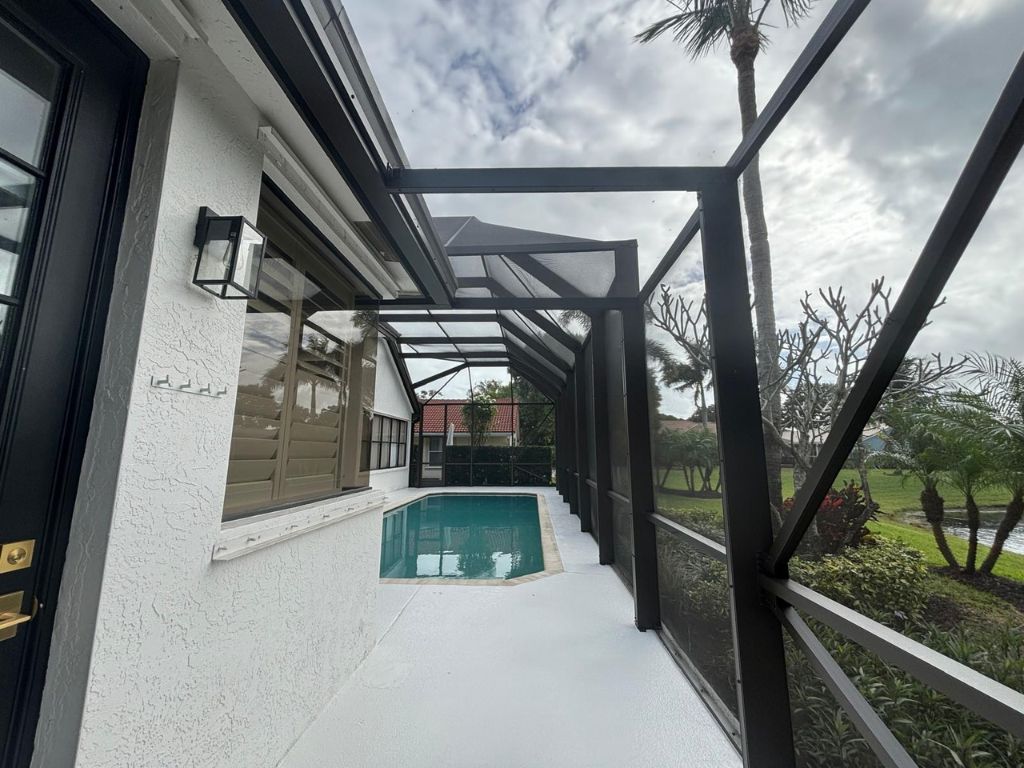
Yes — screen enclosures, pool decks, driveways and pressure cleaning are all part of
what we do, and they follow the same seasonal rules as house exteriors.
Book your exterior while the weather is on your side
Free, no-pressure estimate anywhere in Palm Beach, Martin and St. Lucie counties.
We’ll inspect your stucco, trim and caulking and tell you honestly whether it needs
paint now or can wait.
Get my free estimate
Call (561) 294-0086
Mon–Sat, 7am–6pm · (772) 284-0772 · franciscopainting77@gmail.com
Tags:
Exterior Painting
Stucco
Hurricane Season
Home Maintenance
Stuart FL